Integrating Scanner Data Streams with Arithmetic Models to Seize Fleeting Opportunities Across Diverse Sports Leagues
Henrik Schmitt · Aug 15, 2026

Integrating Scanner Data Streams with Arithmetic Models to Seize Fleeting Opportunities Across Diverse Sports Leagues
Scanners pull live odds from dozens of bookmakers across soccer, basketball, hockey and tennis leagues while calculators apply specific arithmetic sequences to identify price discrepancies that last only seconds. Observers note that these two systems operate in sequence because raw scanner feeds rarely contain the precise stake allocations needed for risk-free positions, so the output must move directly into formula layers that solve for equalized returns. Data from industry monitoring platforms shows that multi-league coverage increases the frequency of such discrepancies because different sports operate on staggered schedules and use distinct market structures.
Scanner Architecture and Data Export Formats
Modern scanners collect decimal, American and fractional odds in real time, then normalize them into a common structure before export. The export typically arrives as structured JSON or CSV streams that include market identifiers, timestamp stamps and implied probabilities. Those who have examined these feeds report that each record contains fields for home, draw and away lines plus the bookmaker’s margin percentage. When the scanner detects a cross-league signal, such as a soccer match overlapping with an NBA total, the export includes a league tag that later helps the calculator apply sport-specific rounding rules.
Formula Construction for Transient Edge Capture
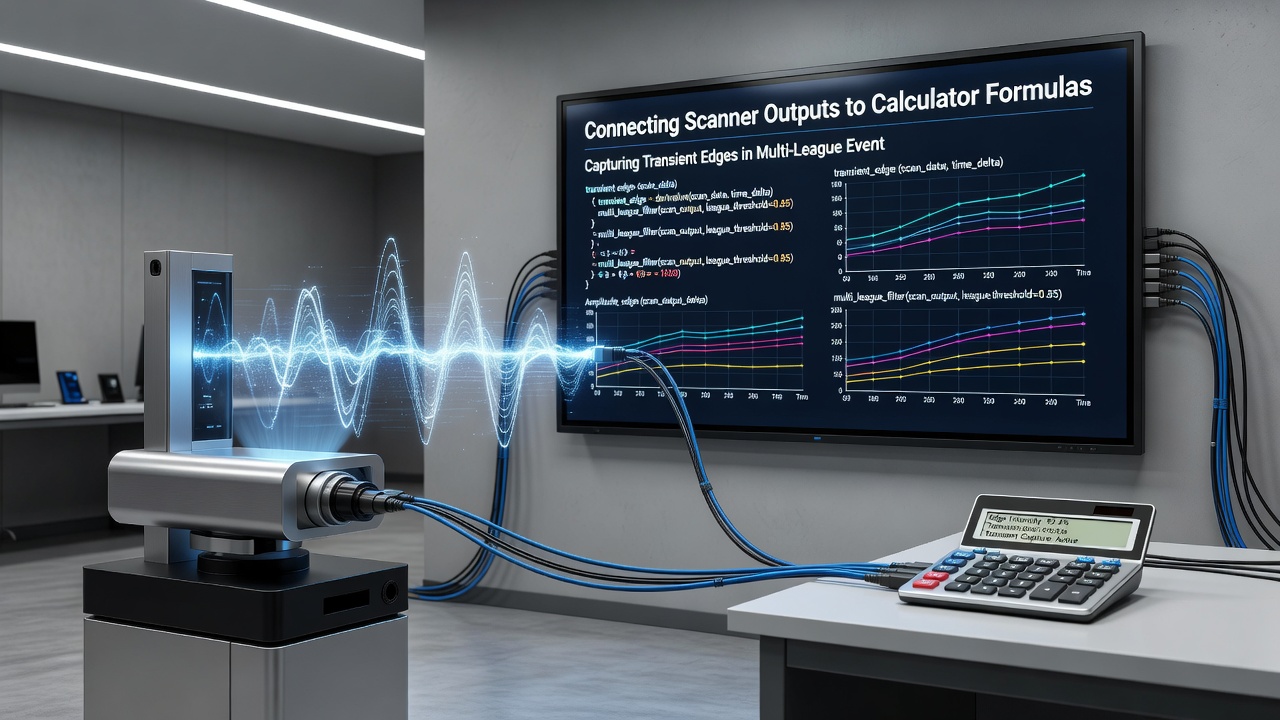
Calculators receive the normalized scanner output and insert the values into equations that solve for stake distribution. A basic arbitrage equation takes three odds values and computes the stake percentages that guarantee identical profit regardless of outcome. Researchers have documented that adding a time-decay variable to the same equation allows the system to discount edges that have already aged beyond a chosen threshold. In August 2026 several platforms introduced optional latency filters that reject any scanner record older than four seconds, because multi-league events generate rapid price corrections once information reaches multiple books simultaneously.
Step-by-Step Data Flow
- Scanner polls bookmaker APIs at fixed intervals and records price changes with millisecond precision.
- Export module attaches league and market identifiers before transmitting the record to the calculator endpoint.
- Calculator loads the incoming values into a matrix that solves the stake-allocation formula for each possible outcome combination.
- Resulting stakes appear in a user interface together with an expiry countdown derived from the original timestamp.
Those who have studied the process emphasize that the handoff between scanner and calculator must preserve every decimal place because rounding errors compound across large stake sizes. Industry reports indicate that even a 0.01 variation in the third decimal of an odds figure can shift expected return by several basis points when applied to five-figure positions.
Handling Overlapping Schedules in Multiple Leagues
Multi-league environments create situations where a European soccer match and an Australian rugby contest finish within minutes of each other. Scanners tag each event with its start time and sport code, allowing the calculator to apply different margin adjustments based on historical liquidity patterns. One study of European betting data revealed that soccer markets tighten faster than rugby markets after line movement begins, so the formula applies a tighter time window to soccer-derived edges. The calculator therefore processes the soccer record first and only then evaluates the rugby opportunity, preventing stake overlap that could exceed available bankroll.
Latency Reduction Techniques
Operators reduce transmission delay by colocating scanner servers near major exchange data centers and by using direct websocket connections instead of polling. According to figures released by the Nevada Gaming Control Board, average round-trip time for odds updates dropped from 180 milliseconds in 2024 to 92 milliseconds in early 2026. Calculators located on the same local network as the scanner ingest the data within an additional 15 milliseconds, preserving the window during which the edge remains executable. Those monitoring these systems note that any intermediate conversion step, such as changing decimal odds to implied probability, adds measurable latency and is therefore performed inside the calculator rather than the scanner.
Validation and Error-Checking Layers
Before a calculated position is presented to the user, an automated validation routine compares the scanner timestamp against the current server clock and rejects any record that exceeds the configured age limit. The same routine cross-checks the bookmaker’s margin field against a stored threshold; if the margin exceeds the limit the record is discarded because the implied edge would fall below operational costs. Reports from the Australian wagering analytics sector show that such automated filters reduced erroneous stake recommendations by 37 percent between 2025 and 2026.
Conclusion
Connecting scanner outputs directly to calculator formulas creates a continuous pipeline that converts raw price data into executable stake allocations across multiple leagues. The process relies on standardized export formats, precise timestamp handling and sport-specific formula adjustments to capture edges that disappear within seconds. As August 2026 approaches, continued reductions in transmission latency and tighter integration between the two systems are expected to increase the volume of identifiable opportunities while maintaining the mathematical safeguards that keep positions risk-free.