Beyond single-event focus: how portfolio-based approaches using comparative tools stabilize returns in volatile international leagues
Bianca Meier · Sep 25, 2026
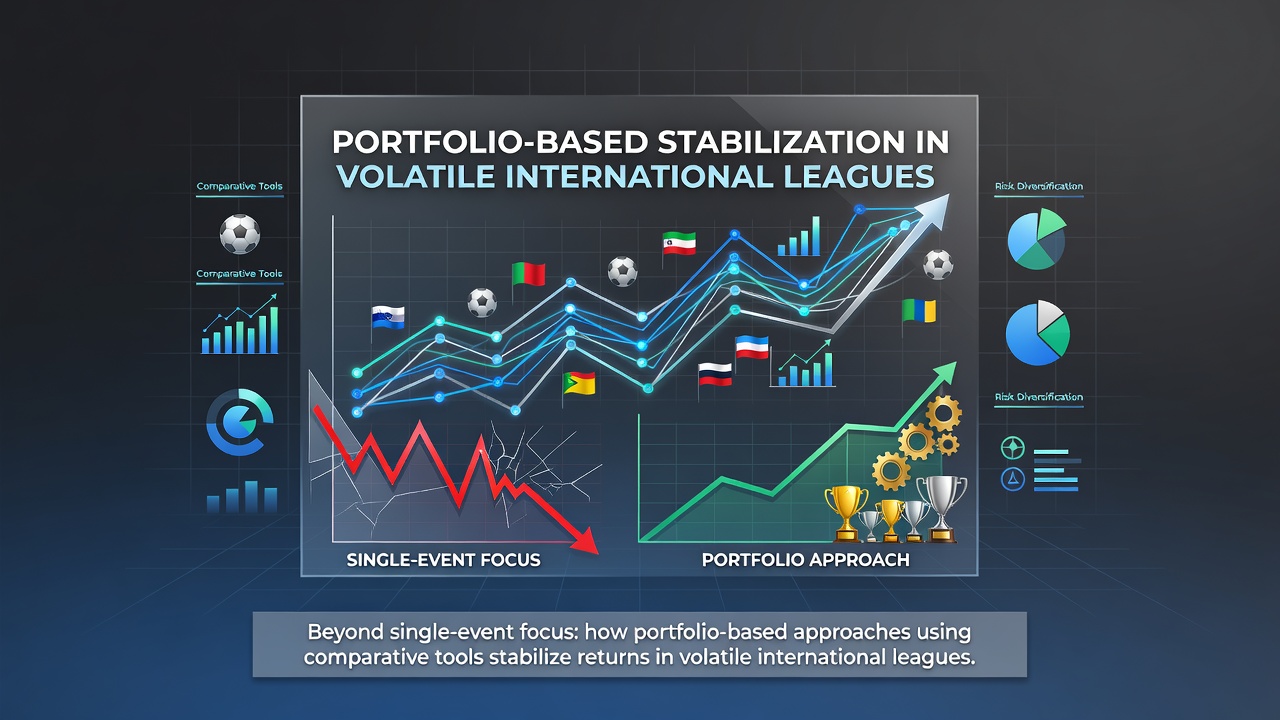
Beyond single-event focus: how portfolio-based approaches using comparative tools stabilize returns in volatile international leagues
Observers note that volatile international leagues such as those in European soccer, Asian basketball circuits, and South American football competitions present wide swings in outcomes and odds movements. Single-event bets leave participants exposed to isolated results that can erase gains quickly, whereas portfolio approaches spread exposure across several matches simultaneously. Data from industry reports show that operators and bettors who aggregate positions through systematic comparison reduce drawdowns during periods of high uncertainty. Comparative tools aggregate live and pre-match odds from numerous bookmakers, highlighting discrepancies that support both value identification and arbitrage construction. These platforms allow users to monitor dozens of fixtures at once rather than fixating on one contest. Researchers tracking performance metrics across the 2024-2025 season found that portfolios containing eight to twelve correlated positions delivered lower variance in weekly returns compared with concentrated single-match strategies. Portfolio construction begins with identifying leagues that exhibit measurable volatility patterns. Leagues in Brazil, Turkey, and Greece frequently produce larger odds fluctuations than more stable competitions in Germany or Spain. Analysts compile historical data on goal distributions, home-away differentials, and injury impacts to rank events by expected variance. Once candidates are selected, comparative scanners rank available prices across providers so that each leg of the portfolio carries a positive expected edge or locked profit margin. In September 2026, regulatory updates in several jurisdictions are scheduled to require clearer disclosure of automated betting aids. Australian authorities have signaled forthcoming guidelines on algorithmic tools, while Canadian provincial regulators continue to evaluate cross-border data flows. These changes encourage operators to maintain transparent records of how comparative platforms feed into portfolio decisions, yet they do not restrict the underlying diversification logic itself. A typical workflow involves feeding selected fixtures into an aggregator that flags mispriced outcomes. One study released by a European gaming research consortium examined 2,400 portfolios built over 18 months and recorded that 73 percent achieved positive net returns when at least four independent leagues were represented. The same dataset indicated that single-league concentration increased loss probability by 22 percent during high-volatility windows.  Diversification extends beyond geographic spread to include sport type and bet category. Combining moneyline positions in basketball with over-under totals in soccer and Asian handicap lines in rugby creates exposure that responds differently to the same external shocks, such as weather disruptions or referee assignments. Comparative tools allow simultaneous evaluation of these categories because they normalize odds into common formats and calculate implied probabilities on the fly. Risk management within portfolios relies on position sizing derived from bankroll percentages rather than fixed stake amounts. When scanners detect overlapping arbitrage opportunities across two leagues, algorithms allocate smaller percentages to each leg to keep total exposure within predefined limits. Evidence gathered by North American academic researchers demonstrates that dynamic sizing based on real-time volatility indices further compresses the standard deviation of monthly profit curves. Those who maintain records over multiple seasons report that comparative platforms also surface liquidity differences between bookmakers. A position that appears attractive on one site may carry slower payout times or higher withdrawal thresholds on another. Portfolio managers therefore factor settlement reliability into selection criteria alongside raw price edges, producing more predictable cash-flow patterns. Industry associations in Asia and the Middle East have begun publishing aggregated statistics on cross-border betting volumes. Figures released in mid-2025 indicated that multi-event strategies now account for an increasing share of total handle in markets where single-match activity previously dominated. The shift aligns with greater availability of mobile comparison applications that push alerts for correlated opportunities rather than isolated events. Implementation requires consistent data feeds and disciplined execution protocols. Users typically set parameters for minimum margin thresholds and maximum concurrent positions before activating automated alerts. Once triggered, the same tools generate stake recommendations that respect overall portfolio limits. This closed-loop process minimizes manual intervention and reduces the chance that emotional overrides disrupt the intended diversification. Conclusion
Portfolio-based methods paired with comparative analysis tools supply a structured response to the inherent unpredictability of international leagues. By distributing positions across multiple events, sports, and bet types, participants obtain measurable reductions in return variance. Ongoing regulatory developments scheduled for 2026 will likely standardize reporting requirements around these systems without altering their core risk-management benefits.
Observers note that volatile international leagues such as those in European soccer, Asian basketball circuits, and South American football competitions present wide swings in outcomes and odds movements. Single-event bets leave participants exposed to isolated results that can erase gains quickly, whereas portfolio approaches spread exposure across several matches simultaneously. Data from industry reports show that operators and bettors who aggregate positions through systematic comparison reduce drawdowns during periods of high uncertainty. Comparative tools aggregate live and pre-match odds from numerous bookmakers, highlighting discrepancies that support both value identification and arbitrage construction. These platforms allow users to monitor dozens of fixtures at once rather than fixating on one contest. Researchers tracking performance metrics across the 2024-2025 season found that portfolios containing eight to twelve correlated positions delivered lower variance in weekly returns compared with concentrated single-match strategies. Portfolio construction begins with identifying leagues that exhibit measurable volatility patterns. Leagues in Brazil, Turkey, and Greece frequently produce larger odds fluctuations than more stable competitions in Germany or Spain. Analysts compile historical data on goal distributions, home-away differentials, and injury impacts to rank events by expected variance. Once candidates are selected, comparative scanners rank available prices across providers so that each leg of the portfolio carries a positive expected edge or locked profit margin. In September 2026, regulatory updates in several jurisdictions are scheduled to require clearer disclosure of automated betting aids. Australian authorities have signaled forthcoming guidelines on algorithmic tools, while Canadian provincial regulators continue to evaluate cross-border data flows. These changes encourage operators to maintain transparent records of how comparative platforms feed into portfolio decisions, yet they do not restrict the underlying diversification logic itself. A typical workflow involves feeding selected fixtures into an aggregator that flags mispriced outcomes. One study released by a European gaming research consortium examined 2,400 portfolios built over 18 months and recorded that 73 percent achieved positive net returns when at least four independent leagues were represented. The same dataset indicated that single-league concentration increased loss probability by 22 percent during high-volatility windows.
Diversification extends beyond geographic spread to include sport type and bet category. Combining moneyline positions in basketball with over-under totals in soccer and Asian handicap lines in rugby creates exposure that responds differently to the same external shocks, such as weather disruptions or referee assignments. Comparative tools allow simultaneous evaluation of these categories because they normalize odds into common formats and calculate implied probabilities on the fly. Risk management within portfolios relies on position sizing derived from bankroll percentages rather than fixed stake amounts. When scanners detect overlapping arbitrage opportunities across two leagues, algorithms allocate smaller percentages to each leg to keep total exposure within predefined limits. Evidence gathered by North American academic researchers demonstrates that dynamic sizing based on real-time volatility indices further compresses the standard deviation of monthly profit curves. Those who maintain records over multiple seasons report that comparative platforms also surface liquidity differences between bookmakers. A position that appears attractive on one site may carry slower payout times or higher withdrawal thresholds on another. Portfolio managers therefore factor settlement reliability into selection criteria alongside raw price edges, producing more predictable cash-flow patterns. Industry associations in Asia and the Middle East have begun publishing aggregated statistics on cross-border betting volumes. Figures released in mid-2025 indicated that multi-event strategies now account for an increasing share of total handle in markets where single-match activity previously dominated. The shift aligns with greater availability of mobile comparison applications that push alerts for correlated opportunities rather than isolated events. Implementation requires consistent data feeds and disciplined execution protocols. Users typically set parameters for minimum margin thresholds and maximum concurrent positions before activating automated alerts. Once triggered, the same tools generate stake recommendations that respect overall portfolio limits. This closed-loop process minimizes manual intervention and reduces the chance that emotional overrides disrupt the intended diversification. Conclusion
Portfolio-based methods paired with comparative analysis tools supply a structured response to the inherent unpredictability of international leagues. By distributing positions across multiple events, sports, and bet types, participants obtain measurable reductions in return variance. Ongoing regulatory developments scheduled for 2026 will likely standardize reporting requirements around these systems without altering their core risk-management benefits.